
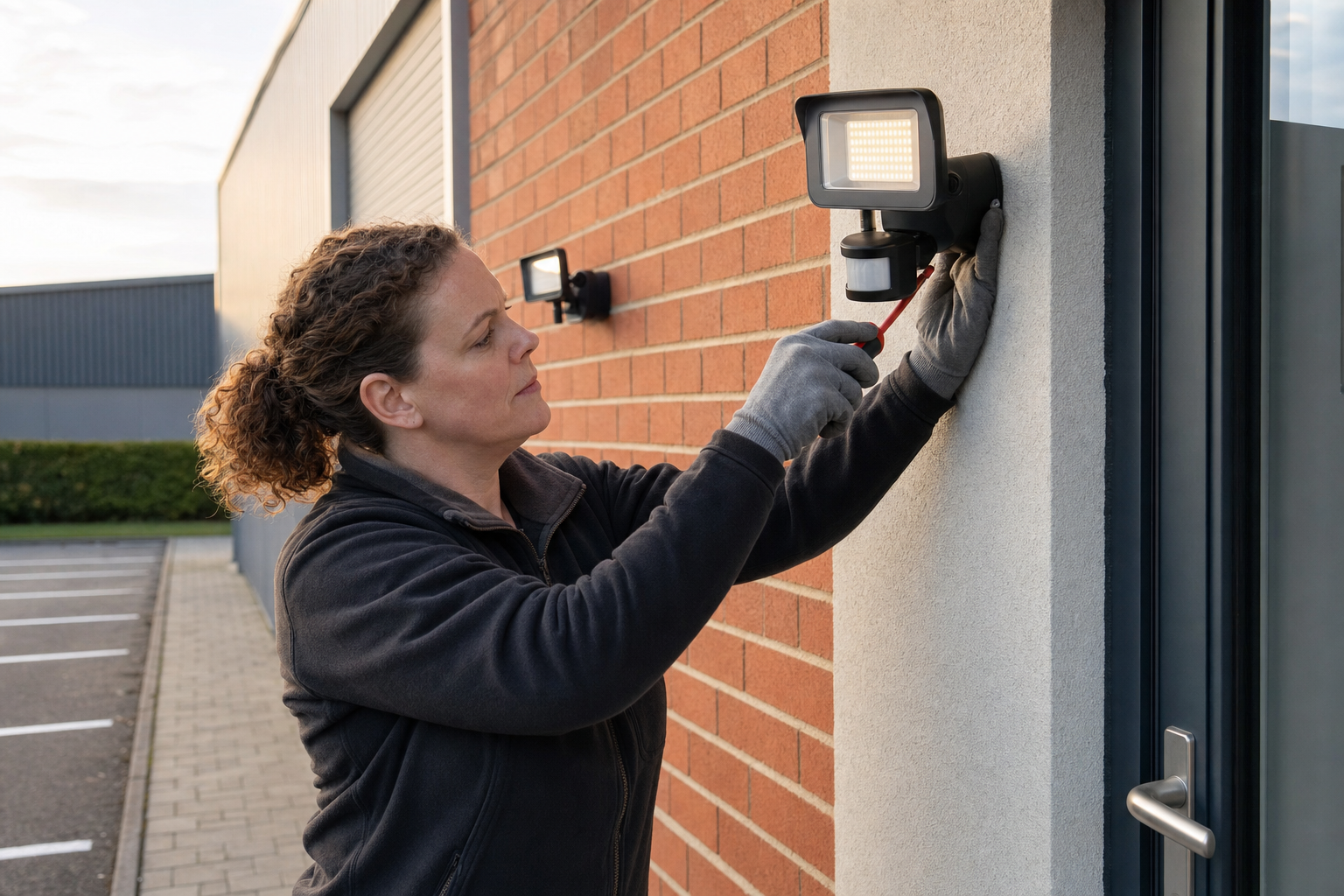
What makes outside lighting more useful
Controls chosen to suit
Sensor, timer and dusk settings can be matched to how the property is used.
Light directed sensibly
We plan spread and detection so useful areas are covered without needless glare.
Repairs as well as installs
Existing security lights that misbehave can be diagnosed and put right properly.
External lighting that helps you see what matters
Security lighting is not only about deterring unwanted visitors. It also makes it easier to move around entrances, paths, parking areas and side access points without doing that familiar half-stumble in the dark. We install external lighting in the places where visibility matters most, with control options such as motion sensors, dusk-to-dawn settings, timers and manual switching.
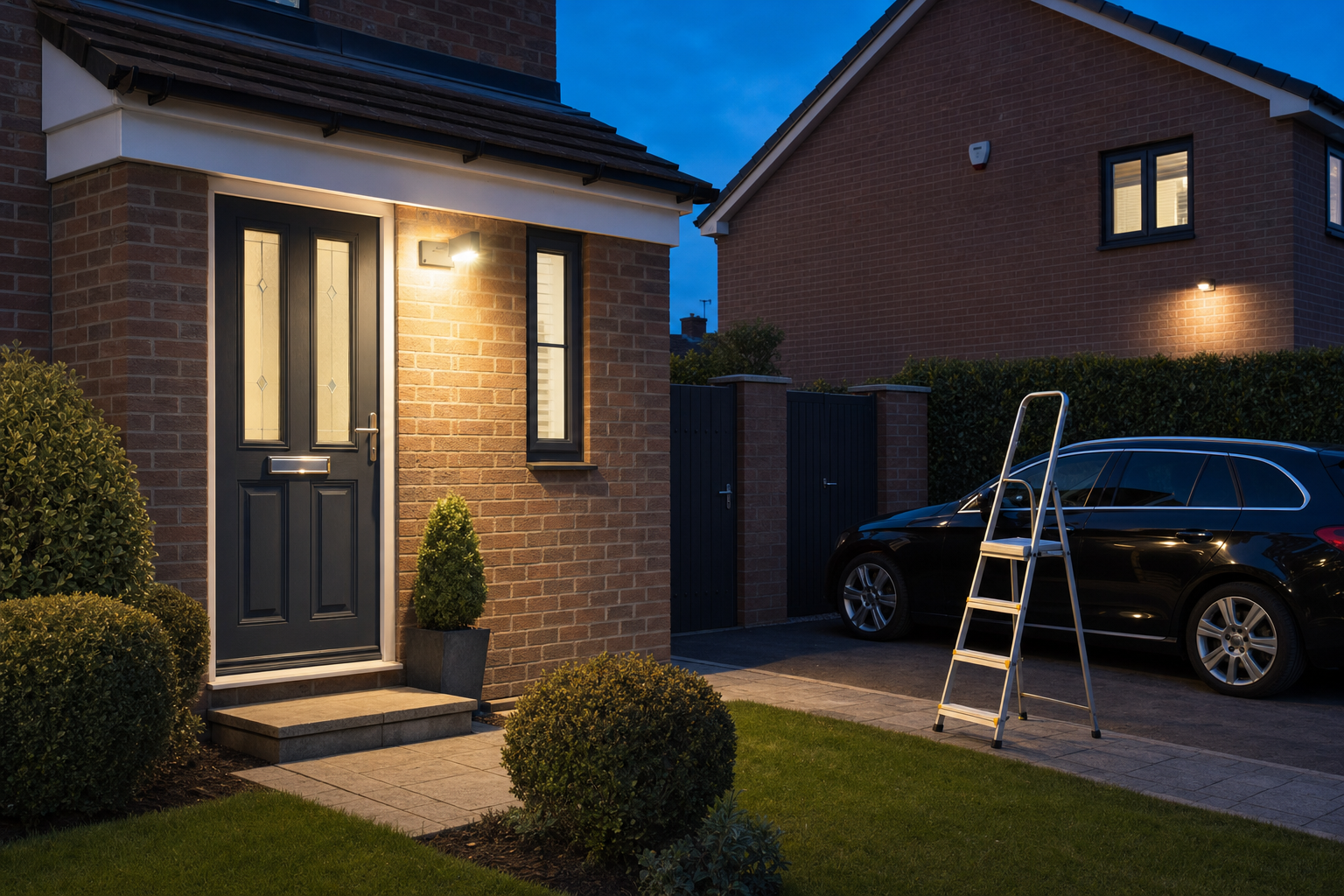

Positioning, adjustment and fault repairs all covered
Good security lighting depends on more than fitting a lamp high on the wall and hoping for the best. Detection range, light spread, weather resistance and access for future maintenance all matter, and careful adjustment can help reduce needless activation. We also diagnose and repair lights that stay on, fail to activate, flicker or trip a circut.
Frequently asked questions
Is a motion sensor always the best choice?
Not always. Motion sensors are useful in many places, but some properties suit dusk-to-dawn control, timers or manual switching better. The best option depends on how the entrance, path or parking area is used and how much automatic activation you actually want.
Why does my current security light keep flickering or staying on?
There can be several causes, including a faulty fitting, sensor issues, connection problems or a wider circuit fault. The useful step is to diagnose the underlying cause first, because guessing at the fitting alone often leads to repeated failures and more annoyance.
Where should security lights be fitted?
Common positions include entrances, side paths, parking areas, rear access points and other vulnerable spots around the property. The exact location depends on light spread, detection range, weather exposure and whether the position will remain practical to maintain later on.